By Pari Esfandiari
This war is not a conventional war—it is a collapse of the moral universe in which war is meant to be understood.
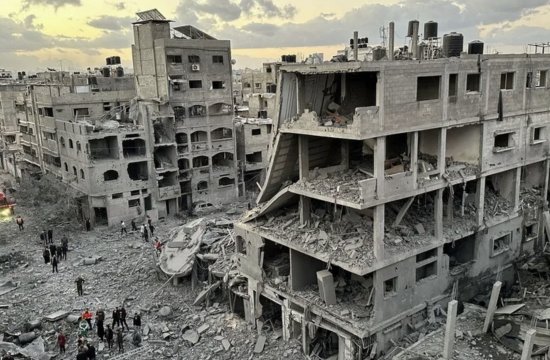
Calls to “protect the Iranian people” coexist with threats to devastate the country. Promises of liberation dissolve into bombardment. A civilization is invoked not as something to preserve, but as something that could be erased.
In the most bizarre turn of this conflict, some Western proponents have even reached for the theological shelf, attempting to frame this devastation as a “just war”—drawing on a distinctly Christian moral vocabulary to sanitize the geography of ruins in a Muslim country. Yet even the head of the Catholic Church, Pope Francis, has rejected such reasoning, warning that in the modern era no war can meaningfully be called “just” when its primary victims are civilians and the fabric of life itself. What we are witnessing is not simply contradiction. It is a collapse of moral coherence—what Albert Camus described as the absurd: the widening gap between the meanings we claim and the realities we produce. That is where we are.
This moral collapse is not confined to the battlefield; it has seeped into Iranian society itself. The categories through which people once made sense of the world—war and peace, loyalty and betrayal, resistance and complicity—are beginning to dissolve. Iranians who once filled the streets in protest now find themselves caught in a war waged in their name. Some who opposed the state have, in the face of external threat, defended it. Others have turned to external force as a vehicle for change, even as that force brings destruction closer to home.
Across opposing camps, a troubling convergence is emerging: the normalization of destruction. The loss of life and the unraveling of the country are increasingly rationalized—whether as the price of freedom or the cost of resisting foreign intervention. Different positions, but the same logic. When a society begins to explain its own devastation rather than resist it, something essential is lost. Loss is no longer confronted; it is justified. This is not only absurd. It is inhuman—and it leaves a lasting mark.
To understand how we arrived here, one must look beyond the present moment. This war did not begin as an inevitable confrontation. It emerged from a prolonged escalation involving the United States, Israel, and Iran—years of sanctions, covert operations, targeted strikes, and regional contestation that gradually crossed into open conflict. For years, Iran avoided direct war, absorbing sustained pressure—economic collapse, isolation, and repeated external blows—while containing internal tensions through increasingly harsh measures. These tensions were not peripheral; they reflected a deepening crisis of legitimacy. Economic hardship, political exclusion, corruption, generational divides, and struggles over identity and freedom—visible in movements such as the Mahsa Amini protests—exposed a widening gap between state authority and societal consent. As conditions worsened, unrest intensified. But it did not remain confined within Iran. It became entangled in external narratives—at times even framed, by figures such as Donald Trump, as something to be encouraged or “weaponized.” This blurred the boundary between domestic dissent and geopolitical strategy, reinforcing both repression and mistrust.
In this context, Iran made a strategic decision: not simply to endure pressure, but to respond. What followed disrupted initial expectations. Assumptions of quick leverage gave way to a more complex reality in which Iran demonstrated resilience shaped by geography, asymmetry, and endurance.
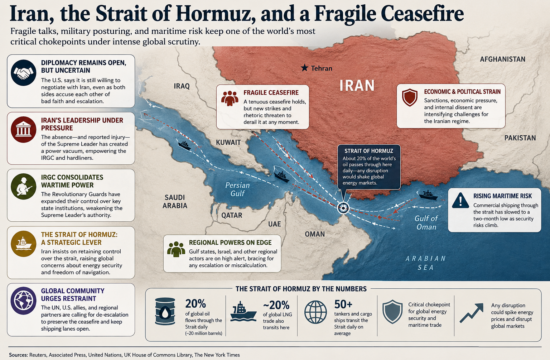
And yet, even now, as negotiations take shape—couched in the language of “major concessions,” “phased de-escalation,” and “historic opportunity”—the narratives remain detached from lived reality. Each side claims victory. Neither fully accounts for the cost. External actors appear insulated from the consequences of their decisions, while the Iranian state remains distant from the demands of its own society. A ceasefire has been reached. It offers relief. But it does not resolve the condition that produced the conflict. Because the central issue is not only geopolitical. It is political in the deepest sense: the relationship between a state and its people.
The Iranian people have not been passive observers of this conflict. They have borne its costs—economic collapse, repression, social fragmentation, and now war. In the process, the social contract itself has been reshaped. The distance between state authority and social consent has widened, while divisions within society—between those inside Iran and the diaspora, and between competing visions of the future—have deepened. These are not temporary tensions. They are structural. Yet in the frameworks now being discussed, they are largely absent.
What is at stake is not only the cessation of violence or even the restoration of state legitimacy, but the reconstruction of political order at multiple levels: between state and society, and within society itself. Without some form of national reconciliation—without rebuilding trust, representation, and a shared political horizon—any settlement will remain shallow. Their exclusion is not incidental. It is the defining weakness of the current approach to peace in a war waged in their name.
Iran is not a blank slate onto which a geopolitical settlement can be imposed. It is a society that has undergone profound transformation—where trust has eroded, expectations have shifted, and social cohesion has fractured, and the gap between state authority and social consent has widened. Stability, in such a context, cannot be engineered from the outside or imposed from above. It must be grounded in consent.
Any durable peace must therefore move beyond containment toward inclusion, incorporating mechanisms for meaningful public participation in shaping the political order. Without this, any agreement will remain fragile—sustained by control rather than legitimacy.
A referendum offers one possible pathway—not as a procedural formality, but as a political process through which the Iranian people can express their will on fundamental questions of governance, including the relationship between religion and the state. But in the Iranian context, trust is fractured. The state fears losing control. Society fears manipulation. External actors are widely seen as self-interested.
In such conditions, the challenge is not simply to hold a referendum, but to make it credible. This requires a carefully designed framework: international observation—potentially under the auspices of the United Nations—to provide procedural assurance; a plural composition of observers to prevent domination by any single bloc; clear separation between monitoring, auditing, and certification; and a high degree of transparency to make the process verifiable. Such a structure does not eliminate influence, but constrains it. It shifts the process from one based on trust to one based on balance and visibility, anchoring the outcome not in power, but in participation.
The question, ultimately, is not whether a ceasefire can hold. It is whether peace can endure. A peace defined narrowly—as the absence of war—may prove temporary. A peace grounded in legitimacy has the potential to last. But that requires a shift in perspective. It requires recognizing that the Iranian people are not instruments—neither of war nor of diplomacy—but agents of their own political future. That their suffering cannot serve as justification without shaping the outcome. And that a society transformed by crisis cannot be stabilized without being heard.
If this war has been fought, even in part, in the name of the Iranian people, then the peace that follows must be built with them—not around them, and certainly not without them. Otherwise, what emerges will not be resolution, but postponement. And postponement, in a moment already defined by rupture, is unlikely to hold.